


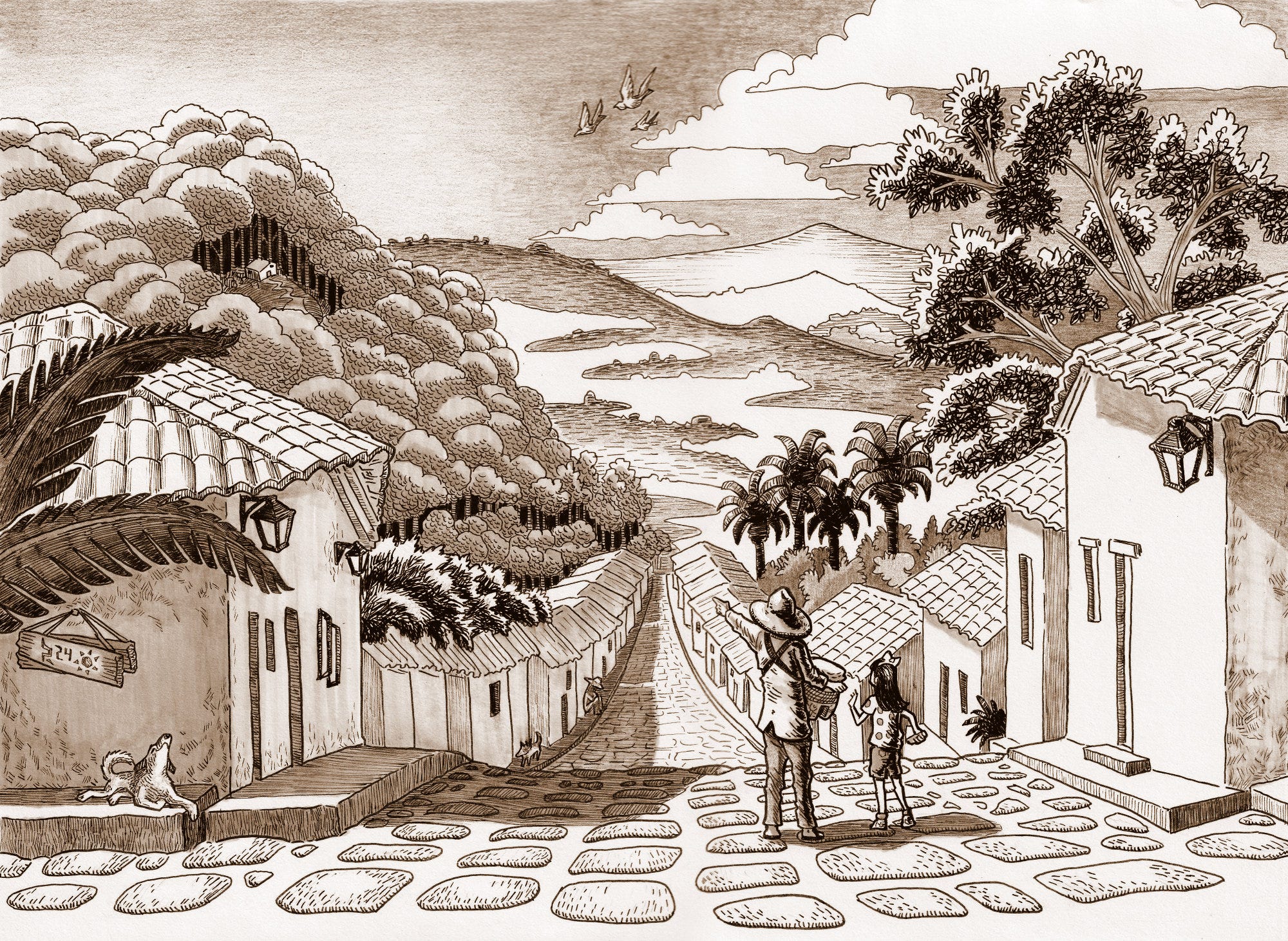
This man was probably a descendant of the natives who lived in the region of El Salvador before the Spanish colonists arrived. He carried a drum and a whistle and walked around the town's streets under the midday sun, playing his instruments. He stopped by where my young grandmother worked as a maid. He was soaking in sweat when she asked him what was all that for; he said, not without some difficulty, due to his agitation and a speaking problem on his lip, that it was to spook out the Ishume.
I could not tell what the Ishume was, nor could my Grandma back then. When we asked her, she just told us that she believed it was some evil spirit wandering the town's houses, at least, that is what this man assured her, not only with his words but with a devotion to his task, which he performed daily.
Same guidelines, different source type
After creating the short story “The Tiny Paper Man,“ based on a tale my Grandma used to tell, I immediately thought of other ones I could write. The challenge I found with the second one was the nature of the original tale. Unlike the first one (Those Granny Tales - Part 1), this was not about an incident but something that used to happen.
Sticking to the guidelines (check it below), I still needed an incident. Since I didn’t have one upfront, I had to create one based on the tale.
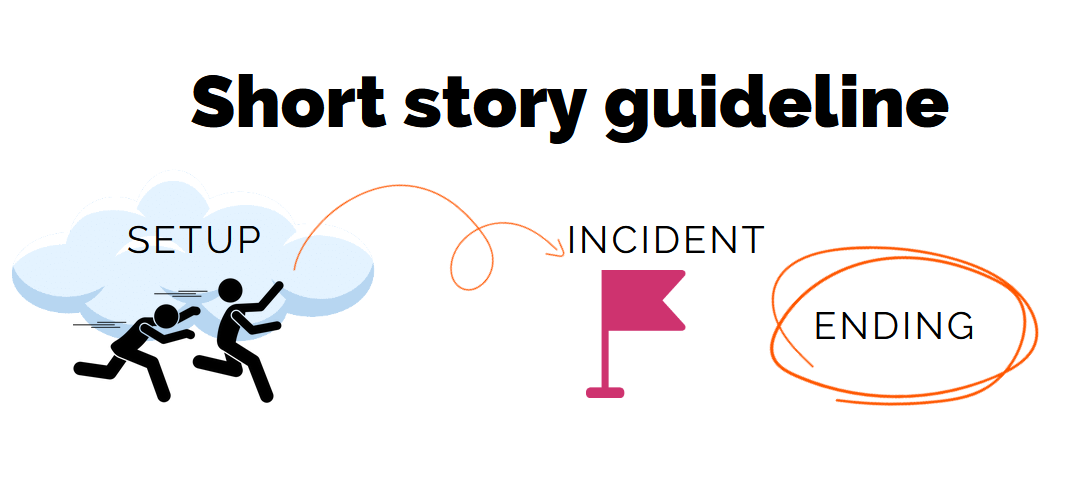
Paying attention to my Granny tale, I had the setup: the man walking through the town spooking the evil spirit with his musical instruments. So, I thought the main event could be derived directly from it. What if this man failed to do his task one day? What if he stopped doing it for several days? Would his actions be justified? This was when I came up with the perfect idea for a main event: the day the Ishume would visit the town.
Some key considerations
When I write a short story like this, I must remember four things to make it work, considering its limited length.
SINGLE: The whole story should be around a single incident or idea.
FEW: A few main characters, probably two, carry the “conflict.”
AVOID: Avoid unnecessary descriptions or setups.
END: Even if the world of the story continues, the story should end.
SINGLE
The single event is the evil spirit's visit to the town's inhabitants. To that end, I will introduce the man of the drum and the mysterious and silly reason behind his task. I will take out this man, and eventually, the story will lead to the incident.
In this case, the story is told from the perspective of a little girl, Stella, who witnesses the events with a child’s eye in a very particular and relatable family context. Stella is an only child, and her grandparents are religious but also very superstitious.
The greatest advantage of this is that as a writer, you can release many of the weights of the story over this main event and release your characters and the description of the locations from unnecessary details.
FEW
Apart from Stella, other characters will wander around the story, but in this case, the human conflict is not focused on one will against the other, like in my first one, in this case, the conflict relies on one belief against another. Stella is someone who does not completely decide to believe in the Ishume but agrees to support the man with the drum. The conflict arises with Doctor Rudolph, who, as a man of science, discards the Ishume as mere superstition upfront and mocks and degrades the man with the drum.
AVOID
This is one of my favorites. A short story allows you to avoid overworking some elements that are mandatory in larger works, like a novel. In this short story, I don’t need to describe the side or main characters in depth; we won’t spend a long time with them anyway. I simply said a few things so the story could carry these people to the incident. For example, Stella is an eight-year-old girl, and we know she puts on a red bow in her hair because it is important for the plot; she wants the man with the drum to see her before anyone else, and she plans to give him a refreshment so that she could ask him about the Ishume.
END
While recommending that a story should have an ending seems obvious, short stories also tend to have open endings. An open ending is not necessarily bad, but it’s typically considered a failure if it fails to deliver a payoff to the main setup. What I consider exciting is leaving a few questions unanswered to implant the idea in the reader’s mind that this story occurred in the broader world before he started reading and will continue doing it after reaching the end.
For example, the main setup in “The Ishume Day” is whether the evil spirit is a superstition; you will find the answer to this question when you reach the story's climax. Along the way, I planted other questions, like when it became necessary to spook the spirit and how it showed up in the first place. These are secondary ones but help in immersion and worldbuilding.
The Ishume Day, a short story
If you liked this post and are curious to read “The Ishume Day,” you can do it:
Read it online via WATPPAD, either in English or Spanish.
Download it to read on your mobile device via GUMROAD.
I hope to share more insights on how I approach writing short stories as I write them. I am also compiling more old tales from my elders. See you in Part 3.